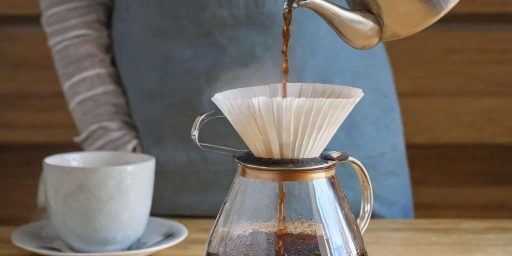




One stormy morning, one of our baristas brews his first espresso. He hasn't touched the grinder since the day before. Yet the shot flows too slowly, thick, and bitter. A half-notch coarser grind, and everything is back to normal. The culprit isn't the beans, nor the machine. It's the air.
Grind size is the most sensitive extraction parameter. And climatic conditions constantly alter it, even when the grinder settings haven't changed a millimeter. Understanding this mechanism means knowing when to adjust, when to leave it alone, and most importantly, when to stop worrying.
Coffee is hygroscopic: it actively absorbs moisture from the air. Once ground, the exposed surface area is considerably larger, and absorption accelerates. As a result, in humid weather, the particles swell, the coffee bed becomes more compact, and water struggles to pass through.
In a professional setting, it is observed that above 60% relative humidityThe particles swell considerably, creating increased resistance to flow. This increased compactness may lengthen extraction time From 15 to 30 seconds using the filter method, according to observations reported by Coffee On Cue. With espresso, the effect is even more pronounced because the extraction window is much narrower.
The resulting coffee is over-extracted: bitter, flat, and lacking vibrancy. The blame is often placed on the beans or the machine, when it's simply the air in the room that has changed.
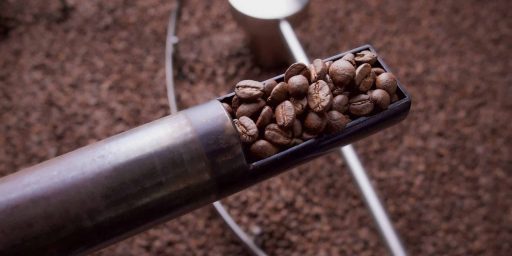
One detail that few baristas mention: humidity also accelerates the oxidation of the beans. Even without considering extraction, beans stored in a humid environment lose their aromas more quickly. Storing your coffee in an airtight container is therefore not just a matter of freshness, it's also protection against weather variations. This is precisely why a careful roasting at low temperature It only delivers its full potential if the grain remains well protected afterwards.
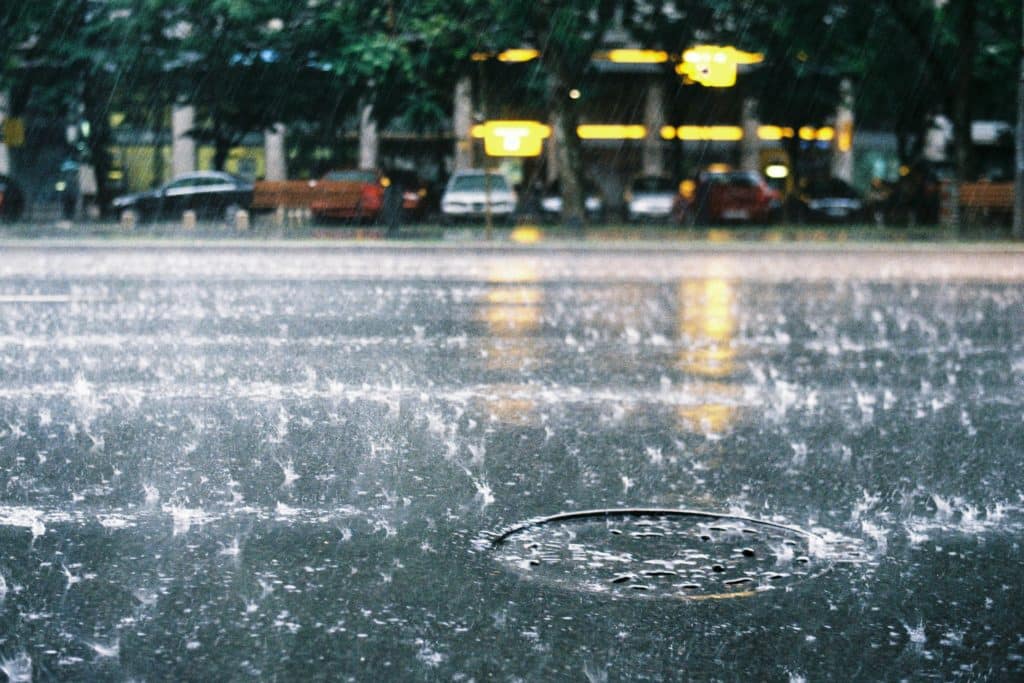
Temperature has a different effect. In warm weather, the grains expand and soften. The mill, set the same as yesterday, then produces a finer grind without anything having changed. Sean McGowan, a specialist at Montville Coffee, describes this phenomenon of thermal expansion: the beans contract in cold weather and expand in hot weather, modifying the fineness of the grinding at a constant setting.
In cold, dry weather, the opposite occurs, but with an added complication. The grains harden, resulting in a coarser grind. The dry cold also promotes static electricity in the mill: the particles become charged, stick together, and are distributed unevenly in the filter.
As explained Specialty BatchThis uneven distribution creates areas that are simultaneously over-extracted and under-extracted within the same basket. The taste in the cup becomes muddled, neither distinctly bitter nor distinctly acidic, just inconsistent.
What makes the adjustment less obvious than it seems is that The two variables can counterbalance each other.A hot, dry day, for example, softens the grain (finer grind) but reduces hygroscopicity (less compact grind). The effects partially cancel each other out. This is why a systematic "heat = coarser" setting doesn't always make sense.
Do you really need to recalibrate your mill every morning by looking at the weather? The answer depends mainly on what you're preparing.
In espressoThe ideal extraction window is around 25 to 30 seconds. A few seconds more or less is enough to tip the balance towards bitterness or acidity. In practice, a good rule of thumb is to adjust the fan speed by half a notch as soon as you notice a significant change in humidity in the room, typically after a storm, a change of season, or when condensation appears on the windows. Below this kind of sharp variation, the difference is rarely perceptible in the cup.
In filter coffee or pour-overThe tolerance is much wider. Extraction time can increase significantly in high humidity, but the method handles these variations better. A slightly over-extracted filter coffee is still drinkable. An over-extracted espresso is not.
The real message, therefore, is not "adjust all the time," but rather: Adjust when it mattersIf the humidity has increased significantly since your last adjustment, or if you're transitioning from one season to another, a half-notch on the grinder makes a difference for espresso. If the sky is just a little overcast, there's no need to recalibrate everything.
For a passionate amateur, the most reliable method consists of three simple steps.
Check the ambient humidity. No need for a professional weather station: the phone's weather app displays the relative humidity. Above 60%, or if it has clearly changed since the previous day, that's a sign.
Fire a test shot. A quick, timed espresso. If it flows too slowly (over 30 seconds), loosen the screw half a notch. If it flows too quickly, tighten it. This test shot takes 30 seconds and solves the problem for the whole day.
Don't touch it anymore. Consistency matters more than perfect weather responsiveness. Small daily adjustments are better than obsessive recalibration with every cloud.
And to limit the impact of variations from the outset, store your grains in an airtight container This significantly reduces their sensitivity to ambient humidity. A well-protected grain reacts less than an open bag left on the counter.
The grind changes with the weather. It's a physical fact, not a barista's obsession. But the good news is, the answer is simple: a quick check of the humidity, a test shot, and a half turn if necessary. The rest is just noise.
What truly makes the difference is the quality of the starting bean. Carefully roasted coffee, stored correctly, provides a stable foundation upon which these micro-adjustments take on their full meaning. For explore artisanally roasted coffees in Switzerland and feel the difference from the first shot of the morning, the Café 9|38 shop is a good starting point.